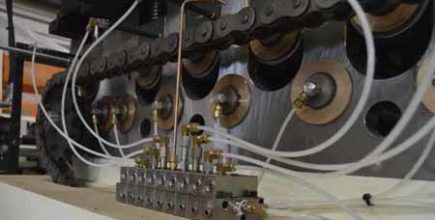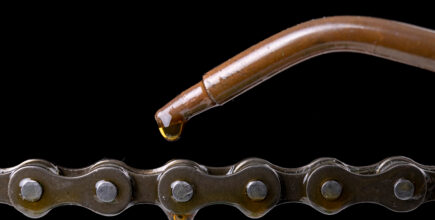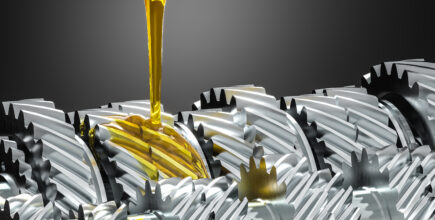
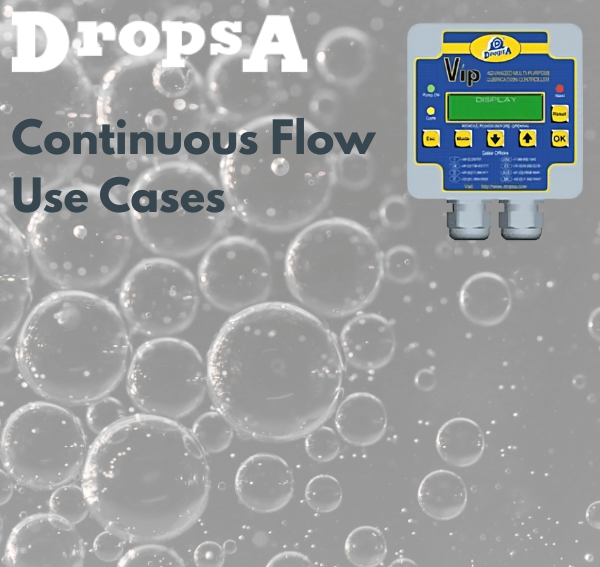
DropsA’s VIP5 lubrication controller has three operating modes: cycle, pulse, and flow. In flow mode, it works with a meter to monitor flow rate. If oil flows outside of preset limits, the controller issues an alert signal to either shut down a pump or an entire machine, or to request a visual inspection.
Flow mode is a valuable tool for maintaining and controlling automated, recirculating lubrication systems that use relatively high flow rates to lubricate and remove heat from bearings because any disruption could quickly cause problems within the machinery.
While the primary benefits of flow mode include rapid fault detection and automatic signal, it’s not always the best mode for an application.
Learn more about our recommended use cases for flow mode, as well as the specific scenarios where we wouldn’t recommend it.
Preventing Starvation
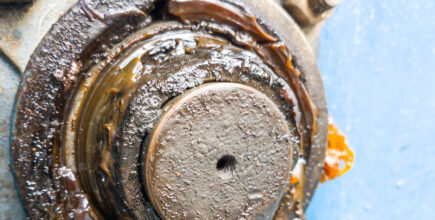
In an automatic lubrication system, a partial blockage that reduces oil delivery could go unnoticed for a while, leaving a bearing running with insufficient lubrication.
In this flow mode use case, continuous monitoring enables prompt fault detection to avoid lasting damage. As soon as the flow drops below a set minimum level, an alert will go out, enabling prompt shutdown while the problem is investigated.
Monitoring Differential Pressure & Flow Rate
Monitoring differential pressure identifies changes in resistance to flow, indicating when a filter needs replacing or how changing temperature is affecting viscosity.
The VIP5 controller can be used in flow mode to indirectly highlight changes in differential pressure. This, combined with flow monitoring, can highlight when a system will need maintenance or when action is needed to reduce pump energy consumption.
Identifying Pump Performance Trends
In flow mode, the VIP5 can be used as a type of pump condition monitoring system, where it tracks the time the pump needs to deliver a set volume of oil.
When you have an established baseline, monitoring will identify whether the time per cycle is increasing and if there are any changes in flow rate. Any gradual change indicates a developing problem with the pump or its associated components.
Detecting Leaks
An increase in flow rate with no changes in pump operation can indicate a developing leak. Leaks can result in oil starvation, product contamination, and potentially hazardous working conditions.
If the flow increases suddenly, it may be that a pipe has split or been cut. In this case, the controller used in flow mode will send an “over-max limit” signal that can trigger an alarm or shut off the pump.
Monitoring Bearing Health
Bearing failure usually develops slowly, and the early signs can be detected by monitoring in flow mode by comparing the instantaneous flow rate with a baseline value.
A gradual increase in flow can be caused by clearances opening and the lubricating oil flowing more freely. Conversely, a slow decline in flow rate suggests a blockage is developing, and fluctuations in flow rate indicate some instability developing in the bearing lubrication system, which should be investigated sooner rather than later.
Catching Correlations Between Flow Drops & Heat Spikes
As bearing problems develop, they often show as drops in flow, followed shortly afterward by an increase in lubricant temperature. This implies that lower flow is reducing metal-to-metal clearance, possibly even allowing contact, causing heat buildup.
Continuous monitoring with a lubrication controller operating in flow mode, combined with lubricant temperature measurement, can detect this situation. By measuring the time between flow drop and heat spike, it’s possible to estimate the severity of the problem and the urgency with which it should be investigated.
A shorter time implies more aggressive contact within the bearing, while a longer gap suggests the problem is not yet severe, but should still be investigated.
Verifying System Performance After Maintenance
Continuous flow monitoring creates a baseline of lubrication system performance. Maintenance should restore operation to this baseline level, unless changes were made to alter oil flow rates. By using a lubrication controller this way, it’s possible to verify that the system is operating correctly.
Reducing Supply Monopolization
Monopolization occurs when oil primarily flows through one line to a single distribution point, leaving other lines and points undersupplied. It can occur when lines are of uneven length, when fluid viscosity changes, or as a result of supply problems, line blockage, or damage.
Monopolization is a serious problem that can quickly lead to overheated bearings and equipment damage. However, a controller like the VIP5, when used in flow mode, detects when flow gets too high in one line and too low in others, allowing rapid shutdown in response to an alert to prevent significant cost and disruption.
The Advantages of Continuous Monitoring Over Periodic Sampling
Continuous monitoring enables detection of transient problems that might otherwise go undetected, such as temporary blockages, startup issues, and sticking valves. It also helps quickly catch serious problems that develop slowly but cause rapid deterioration, such as monopolization, allowing for equipment shutdown and repair.
When We Wouldn’t Recommend Flow Mode
- High-Vibration Environments: These environments can cause misleading values.
- Battery-Operated Controllers: These controllers require periodic maintenance, and flow mode drains the battery faster.
- Legacy Networks: Running controllers on a legacy network that’s slow because it may take too long for over- or under-flow to trigger an alert.
- Total-Loss Lubrication System: We wouldn’t recommend using flow mode in any system without a recirculating loop, as these systems use oil volume for lubrication rather than flow rate.
- Older Controllers: Many older models have limited buffer memory, causing them to overload and miss or overwrite data.
- Data Validation: Flow mode gives derived values, not raw, validated measurements, and the constant stream of data may become too tedious to validate.
- Infrequently Used Equipment: Long periods without data and multiple startup and shutdown events can cause misleading or incorrect alerts.
Learn More From DropsA
If you’re exploring continuous monitoring applications for lubrication systems, DropsA is ready to help.
We are a leading supplier of lubrication systems and components, including the VIP5 controller. Our goal is to provide simple, affordable, and efficient lubrication solutions for equipment used in industries from manufacturing and agriculture to energy and mining.
Visit our website for more lubrication resources, or contact us today for expert, same-day product recommendations.