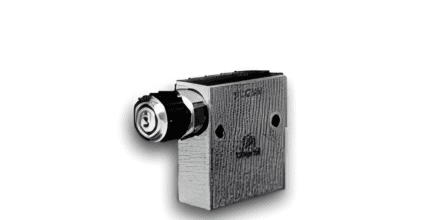
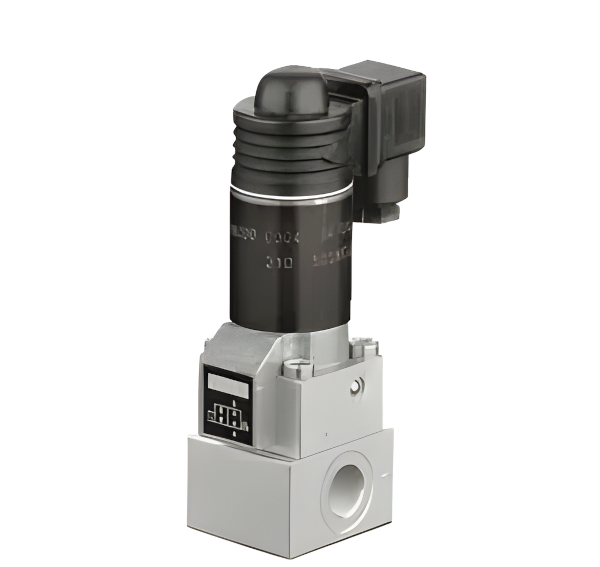
There are two primary design approaches for valves: solid block and modular divider.
The first divider valves were machined from solid billets. In this design, internal cylinders contain the pistons, and hydraulic passages are drilled between them to move oil or grease from piston to piston. This means each solid block divider valve has a set configuration. The number of outputs and pistons, and the volume of lubricant pushed out on each cycle, are all fixed. Plus, machining to achieve the required flow can be very complex.

With solid block valves, any changes needed in the amount of lubricant being sent or the number of points being lubricated require a new divider valve. This limitation was addressed in the 1960s when the first modular design was developed.

In modular designs, input, pumping, and distribution are performed in separate modules. The valve assembly includes an input section that receives lubricant from the pump, pumping units with a piston that provides single- or double-sided lubricant output, and baseplates that move the fluid from one cylinder to the next. O-rings seal each interface, and the complete assembly is held together with tie rods. These modular designs come with an array of maintenance-based advantages, including:
Easy Replacement
Modular divider valves are compact and space-efficient, minimizing any need to change or reposition input and output lines. Should a replacement be needed, the unit can be swapped quickly and easily.
Simplified Troubleshooting
If an internal passage in a divider valve becomes blocked, the entire unit stops working because there’s no fluid movement to operate valves after the blockage.
In a solid body valve, troubleshooting means removing the unit from the machinery being lubricated, and working through to clean each passageway until the blockage is removed.
With a modular design, a maintenance technician can simply remove or bypass each section and cycle the valve to see if it operates. If it does, the blockage is in the module that was removed.
Doesn’t Require Equipment Shutdown
Troubleshooting and repair, as described above, can be performed on the machinery being lubricated by the pump and valve, which prevents the need to shut down operations. This capability is especially beneficial in situations where shutting down one piece of equipment means stopping an entire line.
Fewer Leak Points
The modular nature is sometimes accused of offering more potential points for fluid to escape. While in principle a higher number of interfaces makes this correct, leakage is prevented by using O-rings molded from modern materials. Leaks may still be a risk if the valve is used above its designed maximum pressure.
Additionally, as the design simplifies machining within the valve body components, it’s possible to maintain tighter tolerances and produce smoother surfaces, which works to reduce the number of potential leak points.
Can Be Reconfigured
It’s not unusual to find that a particular joint or interface needs more or less fluid than is being delivered. With a modular divider valve, this is easily addressed by changing the piston size.
The alternative with a solid block valve is to replace the entire unit, and this is an expensive undertaking that may result in prolonged equipment downtime.
Are There Still Use Cases for Solid Block Valves?
Yes, there are niche applications where a solid block design provides advantages. Solid blocks are ideal for any situation where the lubricant must be pumped at very high pressures, or where extreme temperatures and vibration are possible, such as in mining operations or some energy production applications. Solid block designs are also preferred in compact systems and environments where external surfaces need frequent cleaning.
These situations aside, modular divider valves are suitable for the vast majority of cases where lubricating fluid needs to be delivered to multiple points. Applications range from packaging equipment and industrial automation lines to construction machinery, railroad equipment, and cranes.
Explore Valves at DropsA
Achieving effective lubrication of complex moving machinery requires reliable, high-quality pumps, valves, and more. DropsA is dedicated to helping customers meet their lubrication needs by offering an extensive range of valves, including modular divider designs, custom systems, and ongoing support services.
If you have equipment that needs better lubrication or are designing and implementing new lubrication systems, we can help. Contact us today to learn more.