Many types of industrial and heavy-duty equipment are designed to be lubricated with an NLGI 2-grade grease. NLGI, or the National Lubrication Grease Institute, characterizes these grades by viscosity, and a grease that’s graded 2 flows much like peanut butter, meaning that it can be pushed and manipulated. This type of grease is ideal for lubricating bearings because it stays in place once applied. The downside is that this viscosity often makes it difficult for electric grease pumps to pull it from a reservoir.
The problem the pump faces is that when it pulls grease out of a drum, pail, or reservoir, the remaining grease doesn’t flow back into the space created, a property known as “self-leveling.” Instead, it tends to stick to the container walls, drawing air into the pump, and causing cavitation and possibly separation within the grease.
With electric pumps, high viscosity raises startup loads, increases current draw, and heats the motor, a problem that worsens in the winter because lower temperatures raise viscosity.
Ultimately, high viscosity can prevent equipment from receiving the lubrication it needs, and a straightforward solution is to use follower plates.
Understanding Follower Plates
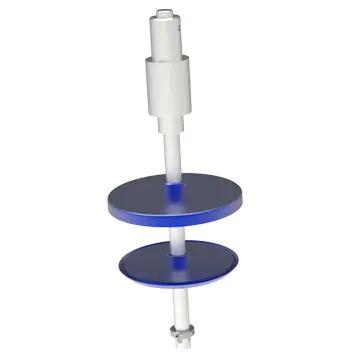
A follower plate is a disc that covers the surface of the grease in the reservoir, and features some form of sealing lip that ensures close contact with the inner surface of the container.
As grease is extracted, the plate moves down, gently pushing the grease surface downward. There are several ways in which follower plates apply force to the grease. Simple systems often use the weight of the plate itself; others rely on the suction created by the pump pulling grease out of the reservoir, and some, including DropsA’s PoliPUMP FP, incorporate a spring that applies consistent pressure to the plate, regardless of extension, which ensures stable operation and eliminates separation risks.
The Impact of Using Follower Plates
The three main follower plate benefits are:
- Overcomes the issue of grease that does not self-level.
- Prevents void formation at the pump inlet, which would lead to cavitation and even loss of pump prime.
- Reduces waste by scraping grease from the container wall.
- Eliminates bridging of grease across voids in the reservoir, which can be a particular problem at low temperatures when viscosity rises.
- Reduces the risk of contamination because the plate covers the grease surface.
- Allows more flexibility in how the reservoir is oriented (spring-loaded follower plates), allowing the electric pump systems to be fully inverted.
Alternatives to Follower Plates

While follower plates are a great method for electric systems using NLGI 2 grease, there are some alternatives, including:
- Cartridge Pumps: These are small, portable systems similar to dispensers used for applying caulk.
- Reservoir Pumps With Agitators: These use shear-softening to make the grease flow more easily.
- Heated Systems: Lower viscosity by raising grease temperature.
- Progressive Cavity Pumps: Complex and costly, these pumps use a machined helical screw that creates strong suction to draw viscous material into the pump.
- Pre-Pressurized Systems: The reservoir is pressurized with air or nitrogen, which pushes the grease towards the pump inlet.
Other than cartridge pumps, which require the expense of a maintenance technician, these are all more expensive than using follower plates and may alter grease properties.
When Follower Plates Are Critical
Using follower plates with electric grease pumps significantly improves the effectiveness and reliability of grease distribution. However, there are situations where their use is absolutely essential:
- When consistent lubrication is needed and is being performed in a remote location where staff isn’t available to resolve problems.
- Cold or refrigerated environments where heaters can’t be used to lower viscosity.
- When a high grease delivery rate is needed.
- When the grease is especially shear-sensitive, and agitation will cause degradation.
- In high-vibration environments, which can make the grease compact and worsen bridging.
- Dusty or high-contamination environments, where a follower plate can prevent grease contamination.
- Whenever a pump is being used with a larger drum or pail, where the lack of self-leveling will otherwise lead to significant waste.
- When using low-suction technology to offload feed responsibility.
Plates Aren’t Only Beneficial for High-Viscosity Grease Applications
Although follower plates are commonly used for pumping thick, semi-solid, and high-viscosity NLGI 2 grease, they can be useful in other situations, including:
- Preventing high-solids coatings and caulks from forming skins.
- Pumping adhesives and sealants like epoxy and silicone.
- Processing semi-solid food ingredients like shortening.
- Pushing thick, topical compounds like the gel coats used with fiberglass.
- Processing plastics, rubbers, and other dense materials that won’t flow without positive pressure.
Find the Right Pumping Solution for Your Application
There’s a lot to explore when developing a grease lubrication system, like…is a dual-line format the most cost-effective? Would a progressive system offer better performance and reliability? What about using modular systems? Then, there are details like grease type, line length, and diameter. Yes, follower plates are important, but they are just one of the many aspects to consider when developing your system.
At DropsA North America, our primary mission is to develop customized lubrication solutions that meet and exceed any industrial and manufacturing need. Our product specialists have extensive experience and are happy to provide expert advice on all types of lubrication, including grease lubrication systems and the use of follower plates.
Contact us today for product recommendations and general design guidance.