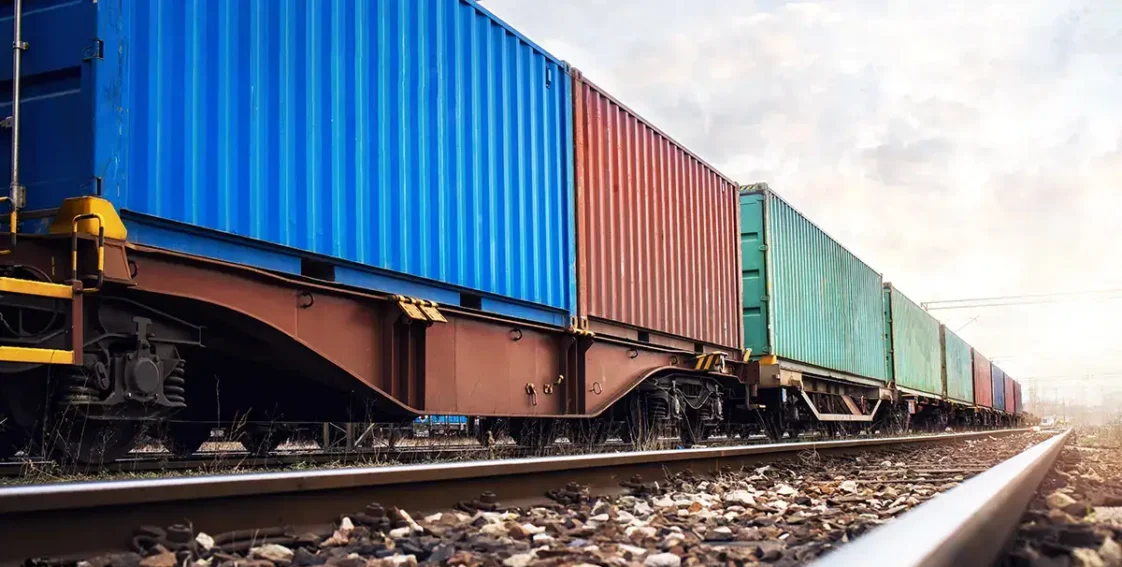
Train operators demand safety, reliability, and efficiency from the equipment they use. Rail wear, especially on curves, is a major challenge for all three.
Wheel geometry causes the wheel flanges to rub against the gauge rail face when a train goes around a curve, resulting in metal-on-metal contact that wears the rail and alters its profile, increasing the risk of derailment.
Addressing this requires costly and disruptive maintenance, from rail grinding to complete replacement. Efficiency pressures mean work is usually delayed until absolutely necessary, but at some point, a section of track must be taken out of service, which carries steep costs and disrupts customers.
One solution to preventing these issues is to apply industrial lubricants, which create a thin film between adjacent metal surfaces to prevent metal-to-metal contact.
Key Benefits of Industrial Lubricants in Rail & Transportation Applications
Reduced Wear & Tear
Applying an extreme-pressure lubricant to the gauge face-wheel flange interface dramatically reduces the direct contact between the two surfaces. “Full film” lubrication, where the lubricant is thick enough to completely separate the two surfaces, is usually impractical, though, especially in high-load situations like rail curves. This means a limited amount of contact and wear will still occur. Overall, with curve lubrication, there’s less wear, and it prolongs the life of both the rails and wheels.
Improved Efficiency & Energy Savings
Friction converts energy that could be used for motion into heat. Multiply that loss by the number of wheels on a passenger or freight train, and it should be clear that friction is expensive, so any reduction in friction leads to significant energy savings.
Smoother Operation
In trains, friction between wheels and rails often shows up as noise. That can be a nuisance to those living or working nearby, as well as to those working on the train itself. Rail wear also allows more lateral motion, which is uncomfortable for passengers and can potentially damage freight. So, smoother operation is another benefit of implementing rail lubrication systems.
Enhanced Reliability & Fewer Breakdowns
Worn rails pose a serious safety hazard, so responsible operators are both vigilant and diligent about making repairs. Inevitably, though, repairs can be very disruptive to train operations: anything that reduces wear also means less disruption, fewer delays, and lower maintenance costs.

Choosing the Right Lubrication System for Rail & Transportation Applications
There are three existing technologies for curve lubrication:
- Wayside
- On-Board
- Hi-Rail
Wayside
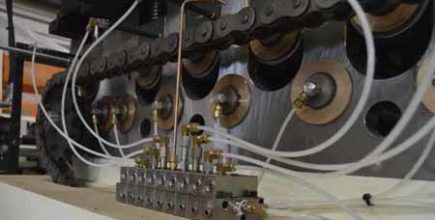
Wayside is a form of centralized lubrication for rail. Extreme pressure grease is pumped on demand, typically triggered by the detection of an approaching train, to specific application points on the rail. Once dispensed, it coats the wheel flanges as the train moves past.
On-Board
These systems require equipment integrated into the rolling stock, which provides lubrication for the wheels on that particular train, either through the use of sprayers or solid lubricants. A notable limitation is that trains without the equipment do not receive wheel-rail lubrication.
Hi-Rail
Hi-Rail refers to special-purpose equipment that applies lubricant to the gauge face as it rolls along the top surface of the rail. Both these and the onboard systems typically use more grease than the on-demand wayside solution.
Protect Your Rail & Transportation Systems With Proven Lubrication Solutions
Founded in 1946, DropsA engineers innovative lubrication systems that help businesses in many industries prolong asset life and improve performance. We understand the importance of lubrication in transportation, and especially lubrication for metro and subway systems, where tight curves can accelerate wear. We offer two types of wayside systems for rail curves: 1) a pneumatic replacement system that replaces your current air compressor and pump and ties into your existing system, and 2) a full system with remote access and metered output for new commissioned jobs. Contact a DropsA product specialist today to learn more about our solutions.