Automotive Manufacturing

Industries

Automotive Manufacturing

Effective equipment lubrication reduces wear, mitigates heat build-up, extends asset life, lowers maintenance costs, and even saves energy. If you’re not using the optimal lubricants and the best lubrication equipment, remember that your competitors probably are. DropsA understands the unique challenges of automotive manufacturing and can help you find the best solutions for your needs.

Common Applications

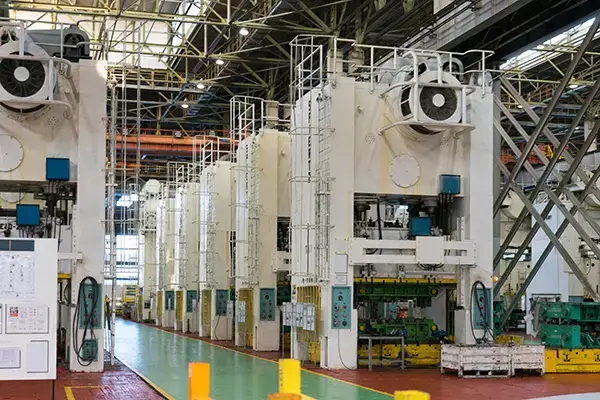
A large industrial facility featuring several tall, white machines lined up in rows. Each machine has large cylindrical components and is supported by metal structures. The floor has a green pathway leading through the center, with areas of red flooring v

Stamping Presses

In stamping operations, both the press and the dies require lubrication to ensure quality production. Presses typically require grease in the bearings and at the metal-to-metal sliding interfaces. While lubricants can be applied manually, automatic systems are more consistent and dependable.
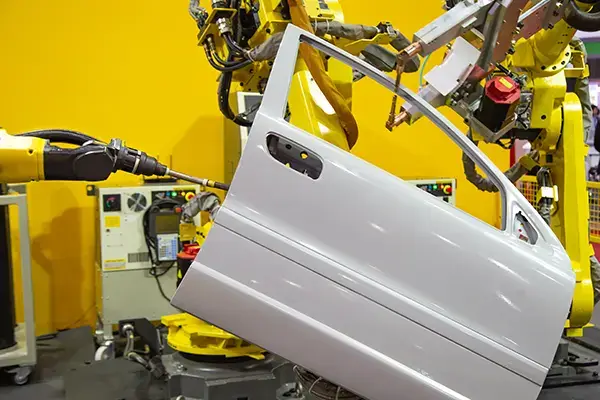
A robotic arm is shown holding a car door in a manufacturing setting. The door is white and is tilted to the side. In the background, there are other robotic arms and industrial machinery against a bright yellow wall. The environment appears to be a high

Robotic Welding Systems

Bearings, gears, and joints within robotic welding systems require proper lubrication to minimize wear, reduce drag, and prevent heat build-up. Collectively, these help the robot deliver the repeatability required while achieving productivity and quality goals.
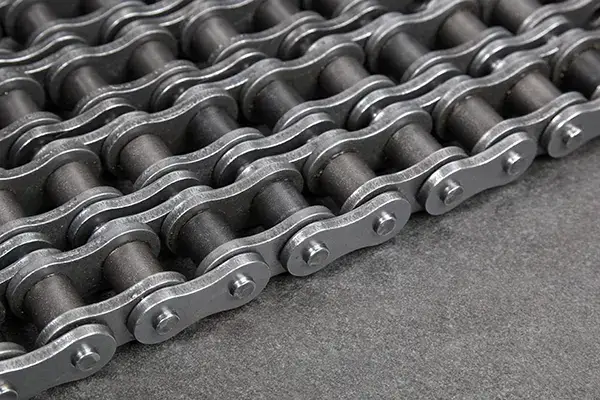
Close-up image of a metal roller chain, showing interlocking links with cylindrical rollers. The chain is arranged in parallel rows on a dark surface, emphasizing its industrial design and metallic texture.

Conveyor Systems & Chain Drives

Chains benefit from drip or spray lubrication systems, which lower friction, saving energy and extending life, while bearings are often grease-lubricated to exclude contaminants from metal-to-metal interfaces.
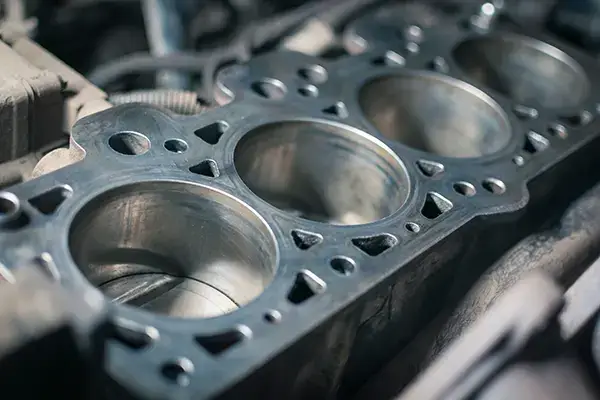
The image shows a close-up view of a cylinder head gasket, which is a flat metal component with circular cutouts. The cutouts are aligned with several cylindrical shapes beneath them, indicating the areas for engine cylinders. The surrounding area of the

Engine Block & Cylinder Machines

Using the right lubricants for engine blocks and cylinder machines drives out waste and ensures performance and durability. Minimum quantity lubrication (MQL) helps optimize cutting conditions and increase productivity by simplifying chip disposal and preventing surface corrosion.
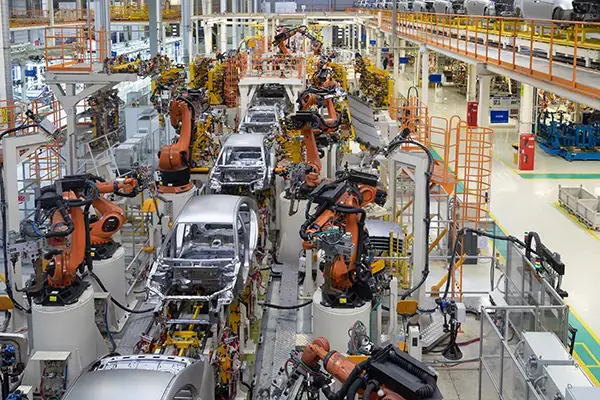
An overhead view of a large automotive manufacturing facility. In the foreground and midground, several partially assembled car frames are positioned on production lines. Robotic arms, mostly orange, are visible on both sides of the car frames, engaged in

Body Assembly Lines

Unplanned downtime on these hugely complex systems is extremely costly. Precise delivery of the correct lubricants minimizes component wear while protecting against corrosion. Additional benefits include lower friction, enhanced movement precision, and reduced heat generation.
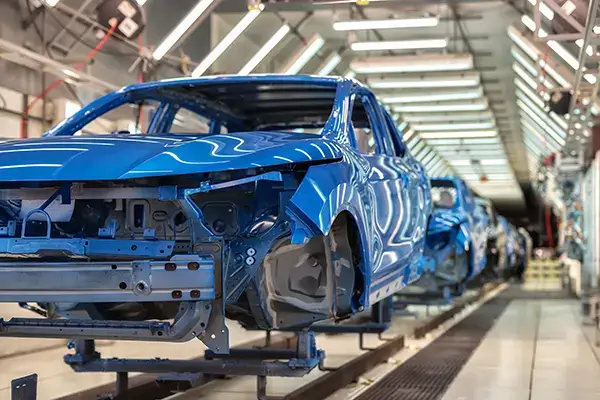
An assembly line featuring several blue, partially constructed car bodies. The cars are lined up in a well-lit factory space, showcasing a modern manufacturing environment. The focus is on the front left car, with visible structural components and no wind

Paint Shop & Final Assembly Equipment

In addition to stable, consistent motion, lubrication in the paint shop helps exclude contaminants from metal-to-metal interfaces. By reducing wear rates, this extends equipment life and helps organizations meet ROI goals for their assets.