Methanol injection is the most widely used method of preventing hydrate blockages in hydrocarbon pipelines. It works by preventing free water in the pipe from forming cages around natural gas molecules like methane, ethane, and propane. If these cages are allowed to develop, they can quickly form ice-like blockages that disrupt production. Their removal is disruptive, expensive, and dangerous at times.
Hydrate formation is strongly influenced by temperature and pressure within the pipe, along with the amount of free water. Preventing formation, therefore, entails adding enough methanol to suit the prevailing conditions. This can mean matching water mass with up to 60% methanol by weight.
Adding too little methanol risks blockages, especially in areas of higher pressure and lower temperature. However, because methanol is not recovered from the pipeline, adding too much results in wasted gas, which increases operating costs and can also lead to unnecessary contamination of the fluid being transported.
The key to minimizing total costs is to determine the optimal methanol injection rate.
What You Need to Know First: Methanol Phases
Once methanol is injected into pipes, it undergoes partitioning, where it either combines with the free water, vaporizes, or combines with the oil in the pipes, a factor that complicates determining the ideal injection rate.
Aqueous
In the aqueous phase, injected methanol combines with free water, preventing the formation of cages around natural gas molecules.
The amount of methanol needed to achieve this depends on the temperature, pressure, and water cut (the proportion of water to gas or oil) in the pipe, as well as the anticipated temperature drop.
Vapor
A portion of the injected methanol will vaporize after injection. In low-pressure systems, this can be as much as 30%, although this falls at higher pressures.
The amount of methanol lost due to vaporization must be calculated and added to the quantity that will combine with water. This is done using the expected temperature and pressure conditions in the pipe. As temperature will typically vary along the length of a pipe, some condensation and changes in the proportion lost as vapor should be anticipated.
Hydrocarbon
A small proportion of the injected methanol will combine with oil in the pipe. The precise amount depends on the properties and composition of the oil, plus temperature and pressure, making this number very difficult to calculate.
Calculating Injection Rate
When determining a target methanol injection rate, it’s important to consider temperature and pressure throughout the length of the pipe. From this, it’s possible to set a goal for temperature depression, or the amount by which the hydrate formation temperature needs to be lowered at a given pressure.
For safety, the anticipated lowest temperature expected is set several degrees below this value. Once this is established, it’s possible to generate the target methanol injection rate needed to protect the entire pipeline along its length.
This is done in three main steps:
- Determining the concentration needed in water for the lowest expected hydration temperature. The desired or target methanol concentration is determined from hydrate inhibition charts or simulation software (and less often, by direct calculation).
- Adding the amount of methanol that will be lost as vapor. This is determined using data from the Gas Processors Suppliers Association (GPSA) or with simulation software.
- Adding the amount of ethanol that will be lost to oil. Again, data from the GPSA can be used, although many businesses now prefer to work with sophisticated simulation software.
Determining the methanol injection rate then entails combining this number with the gas flow rate to arrive at the target injection rate. This is usually done with special-purpose software that accounts for temperature variations and the required temperature depression.
For quick estimates, engineers often use the Hammerschmidt Equation, which provides an estimate of the temperature depression achieved for a given methanol concentration in water. While it lacks the precision of simulation programs, it is easy to apply and yields useful results.
Safety Considerations
Pipelines run in dynamic environments, so conditions within them are never fixed. Accordingly, while an injection rate might be appropriate for avoiding hydrate formation under the expected conditions, the situation could change.
To reduce the risk of hydrate plug formation, consider:
- Methanol losses during the hydrocarbon phase – changes in oil levels can reduce the amount of methanol available for mixing with water.
- Temporary condition changes – pressure inside the pipe may change as a result of pump or filter work, or changes in how the contents are drawn off.
- Mixing issues – methanol likely won’t be evenly distributed throughout the fluid in the pipe after injection, and the concentration in water may be lower than expected.
- Subcooling – local cool spots along the pipe could allow fluid to cool below the hydrate formation temperature.
To account for these variables, increase the methanol injection rate above the calculated value. Depending on specific application details, the increase could range from 10% to 50%.
Ensuring Precision
Once an injection rate has been established, it shouldn’t need to be altered unless fluid flow or conditions around the pipeline change. Process changes should be carefully monitored to identify when the risk of a problem is increasing. Additionally, periodic checks of pump performance and flow rates will help identify any emerging flow faults.
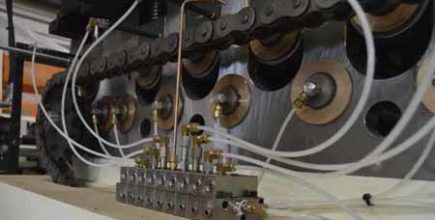
Using divider blocks/splitter valves is another effective way of ensuring correct methanol distribution. These take the output from a single pump and split it at a set ratio between multiple injection points. These blocks can help prevent hydrate risks in stable-flow-rate systems when applied around a potential choke point.
DropsA offers divider blocks that are CE and ATEX-certified for methanol injection. They feature up to six outlets and can withstand pressures up to 4,000 PSI (276 bar). Our divider blocks are also equipped with Buna O-rings for methanol compatibility and use a 1/4” NPT inlet and 1/8” NPT outlets. Request a quote or contact us today to learn more.